What to wear for a headshot
A headshot is cropped close, so the camera sees your face, your collar and your shoulders. This guide from Perfect Headshot PDX in Portland, Oregon covers what to wear for headshots, what to bring, and how to get ready the night before.
Clothes you already own will do. Pick one or two things that fit well, in a color that suits you. You will be coached on expression and posture during the session, so clothing is the only part to plan ahead.
The short version
- Wear solid colors. Mid-tones and darker shades hold their shape against a white background.
- Choose fit over fashion. The collar and shoulders are all that shows. They should sit flat and fit you today.
- Keep the neckline simple. A collar, a crew neck, a modest V or a turtleneck all work.
- Press it and check it. Iron or steam everything, then look for lint, loose threads and pet hair in bright light.
- Look like yourself. Wear your hair, your glasses and your makeup the way people see you on a good day at work.
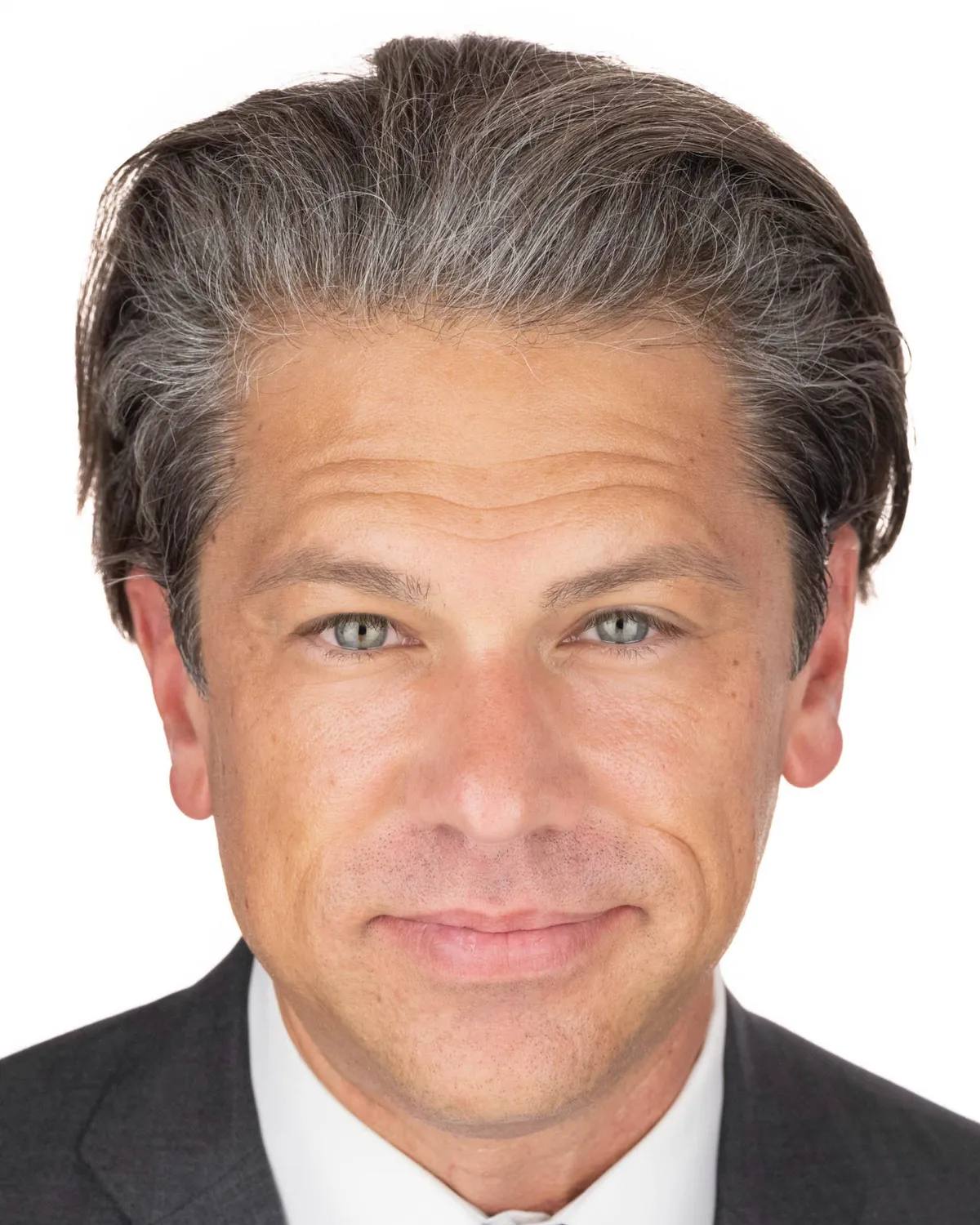
What works here: a dark jacket that fits at the shoulders, a plain white shirt, and a tie with a quiet stripe.
Photographed at our Austin studio. Portland portraits will join them as we photograph people here.
Colors and patterns
The examples on this page are close portraits on a plain white background, photographed at the Austin studio. Against white, a solid color in a middle or dark tone gives your shoulders a clear edge and keeps attention on your face.
- Good choices: navy, charcoal, black, forest green, burgundy, teal, plum, rust and mid-blue.
- White and very pale tops can fade into a white background. Wear them under a darker layer, or choose them knowing your hair and skin will carry the contrast.
- Neon and very bright colors reflect onto the skin under studio lights. Leave them at home.
- Small, tight patterns such as fine checks, thin stripes and herringbone can shimmer on a screen. A wide, soft stripe on a tie or scarf is fine.
- Logos and printed words pull the eye and date the photo. The exception is a uniform or a company shirt that you have been asked to wear.
- Shiny fabrics such as satin catch the light in patches. Matte cotton, wool and knits photograph evenly.
If you are unsure, pick the color people compliment you in. It is usually the right one.
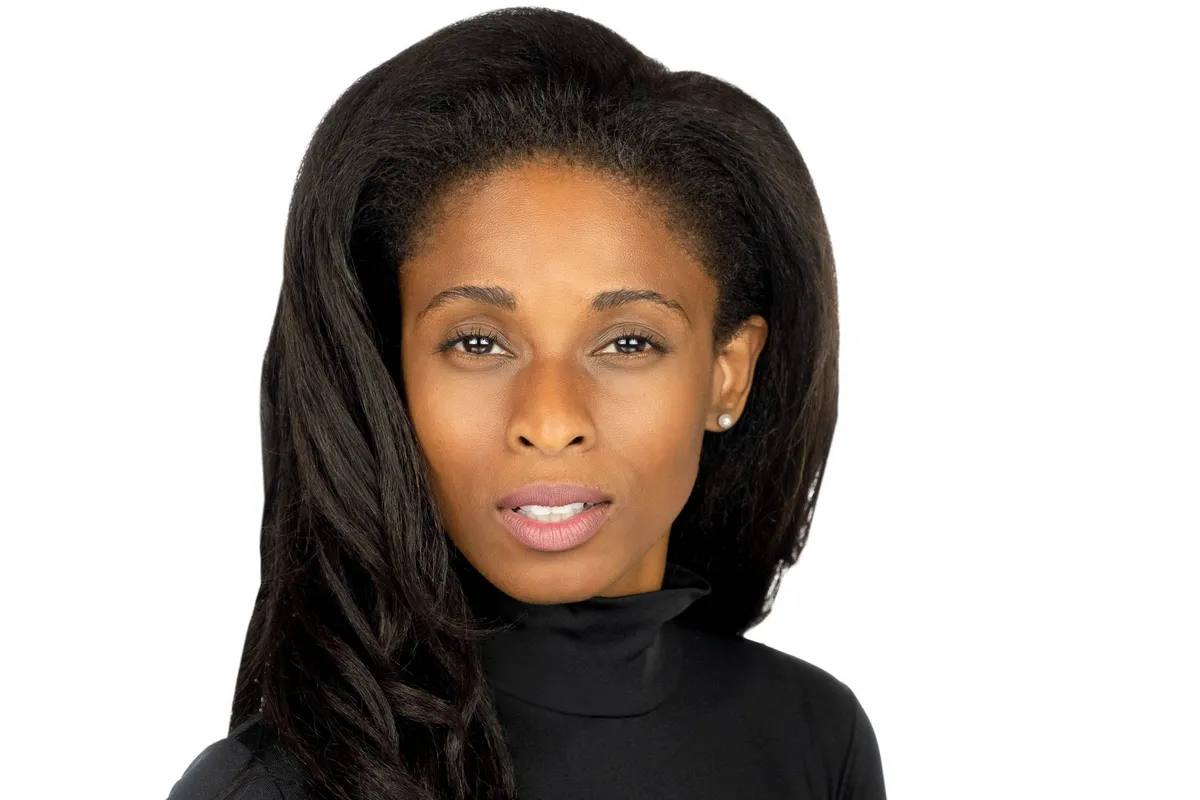
What works here: one solid dark color, a high clean neckline and a single small earring.
Photographed at our Austin studio. Portland portraits will join them as we photograph people here.
Fit and necklines
In a close crop, fit shows up at the neck and the shoulders. Try each top on a few days ahead and look at it in a mirror from the chest up.
- A shirt collar should close without pinching and sit flat when it is open.
- Shoulder seams should end where your shoulders end.
- Fabric with some weight keeps its shape. Thin jersey clings and wrinkles.
- A crew neck, a modest V, a collar or a turtleneck all frame the face well.
- Very wide or very low necklines, thin straps and strapless tops can drop out of a close crop and leave the picture looking bare. A top with some shoulder coverage keeps fabric in the frame.
- Keep jewelry small and matte. One simple necklace or a pair of small earrings is enough.
Jackets and layers
A jacket adds structure to the shoulders and makes a plain top look finished. It is the easiest way to look one step more formal.
- Fit matters most at the shoulders and the collar. The jacket should lie flat against your shirt collar at the back of the neck.
- Button it and sit down. If it pulls into an X at the button, wear it open or choose another.
- A dark jacket over a lighter top gives the cleanest result on a white background.
- If you wear a tie, tie it before you leave home and check that the knot covers the top button.
- A fine knit, a cardigan or an open collar under a blazer works well for a relaxed look.
If your office is casual, as many in Portland are, dress one step up from a normal workday. That is usually a jacket over a plain knit, or a good shirt with no tie.
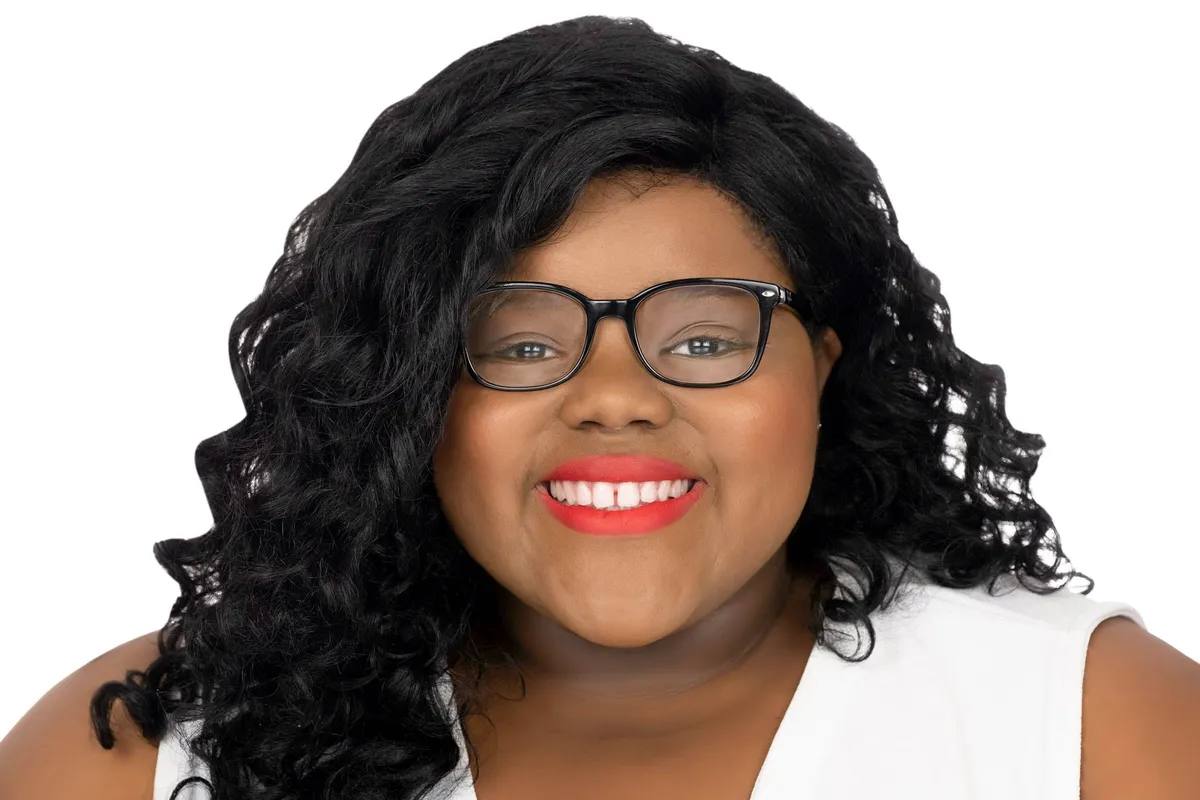
What works here: clean lenses with no glare, frames that sit level, and a lip color that suits the person wearing it.
Photographed at our Austin studio. Portland portraits will join them as we photograph people here.
Glasses
If people know you in glasses, wear them. A headshot should look like the person who walks into the meeting.
- Clean the lenses just before your session and bring the cloth with you.
- Check that the frames sit level. An optician can adjust them in a few minutes.
- Lenses with an anti-glare coating are the easiest to photograph. Blue-light coatings can show a purple or green tint, so bring an older pair as well if you have one.
- Lenses that darken in sunlight need a few minutes indoors to clear. Arrive a little early.
- Reflections are handled with the angle of the lights and a small tilt of the chin or the frames. That is part of the posing direction in every session.
If you wear glasses only some of the time, bring them. You can be photographed with and without.
Hair and grooming
- Get a haircut about a week ahead, so it has time to settle. Avoid a new style or a new color the day before.
- Wear your hair the way you wear it to work. Bring a brush or comb and whatever product you normally use.
- Stray hairs show against a white background. A little product or hairspray keeps them down.
- Trim a beard or moustache the day before and tidy the neckline. If shaving leaves your skin red, shave the night before.
- Use moisturizer and lip balm in the morning. Dry skin and dry lips show in a close portrait.
- Skip new skincare products, facials and waxing in the days before. Redness takes time to fade.
Do not worry about a blemish that appears that morning. Every image you buy is retouched.
Makeup
Arrive camera-ready. Hair and makeup are not offered for individual sessions. Do your makeup at home, or see your own makeup artist before you come.
- Wear what you would wear to an important day at work, with slightly more definition at the eyes and lips.
- Choose matte over shimmer. Glitter and highlighter read as shine under studio lights.
- Some foundations and powders with sunscreen in them look pale under flash. Use ones you have been photographed in before.
- Blend foundation down the jaw and neck so the colors match.
- Bring your lipstick and a pressed powder or blotting papers for touch-ups.
If you do not wear makeup, you do not need to start. Blotting papers are useful for anyone whose forehead or nose gets shiny.
What to bring
How much you pack depends on the session. Each one allows a set number of outfits, and an outfit can be as simple as a different top.
Classic Headshots
30 min, 1 outfit + accessories
Choose the outfit that matches where the photo will be used, and arrive wearing it. Use the accessories for small changes, such as a tie or a necklace. Carry a spare top in case of a spill on the way.
Creative Headshots
1 hour, 3 outfits + accessories
Make each look different from the last. Change the color, the neckline and how formal it is, so the finished photos do different jobs.
The Full Experience
2 hours, 6 outfits + accessories
Plan a spread: some looks for work, some casual, some with more character. Bring everything on hangers and decide the order before you arrive.
Camera Confidence Session
1 hour, 3 outfit changes
Start in the clothes you feel most at ease in. Keep the most formal look for later in the session, once you have settled in.
For any session
- Your outfits on hangers, pressed, in a garment bag or under a cover. It rains here, and a wet collar shows.
- A lint roller.
- A brush or comb and your usual hair product.
- Lip balm, and your lipstick and powder if you wear them.
- Your glasses and a lens cloth.
- Ties, scarves and jewelry in a small bag, so nothing gets left in the car.
- A hood or an umbrella to keep your hair dry between the car and the door.
The sessions are described in full on the headshots page, and every price is on the pricing page.
The night before
- Try on every outfit, with the jacket and accessories you plan to wear.
- Iron or steam each piece and hang it up. Check collars and shoulders in bright light.
- Pack the bag: accessories, lint roller, brush, lip balm, lens cloth.
- Drink water and go easy on alcohol and salty food.
- Go to bed at your usual time. Rested eyes do more for a headshot than any clothing choice.
The morning of
- Eat something. A session takes concentration.
- Do your hair and makeup as you would for work.
- Dress in something that buttons or zips at the front if you plan to change, so your hair stays in place.
- Look at your collar and shoulders in a mirror before you leave.
- Leave early enough to arrive unhurried. A calm first five minutes shows in the photos.
A short version to forward to your team
If you are organizing a team day, your colleagues need less detail than this page gives. Team days happen at your office in the Portland metro. Each person has a short coached session and receives one retouched headshot, so one outfit is enough.
Decide how formal the team should look and say so in the first line. Then send the note below about a week ahead, and again the day before.
Headshot day: what to wear
- Wear a solid color top in a middle or dark tone. Navy, charcoal, green and burgundy all work well.
- Avoid small patterns, logos, shiny fabric and neon colors.
- Check the fit at the collar and shoulders. That is all the photo shows.
- Bring a jacket if you would wear one to meet a client.
- Iron or steam your top, and use a lint roller before your turn.
- Wear your hair and makeup as you would on a normal good day at work. Please arrive ready.
- If you wear glasses, clean them and bring them.
- Your turn takes a few minutes and you will be coached through it. No practice is needed.
If you have added a second look for your team, tell people to bring a second top. Hair and makeup at your office can be added to a team day and is quoted per team.
Ready to choose a session
Pick the session that fits the number of outfits you want, and send the request form. A person replies by email to arrange a date. Nothing is charged on this site.